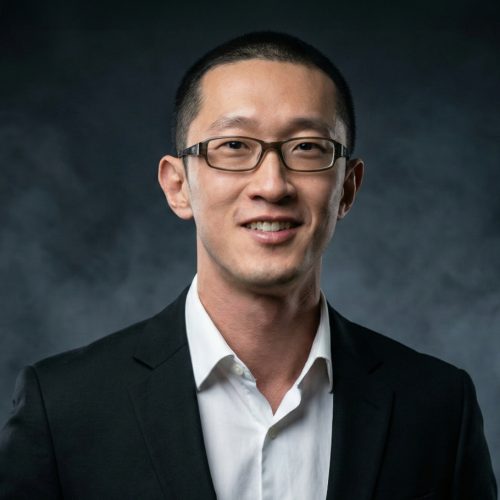
Prof. Por Lip Yee, Professor at CSNET, Universiti Malaya.
Prof. Por Lip Yee was invited as a Keynote Speaker at the International Conference on Generative Artificial Intelligence and Image Processing (GAIIP 2026), where he delivered the keynote address titled "From Data to Intelligence: Understanding the Foundations of Machine Learning". The address was designed to help participants move beyond surface-level use of AI tools and toward a principled understanding of how machine learning systems are built and evaluated.
Beyond the Black Box
A recurring challenge in applied AI communities is the widening gap between practitioners who deploy machine learning tools and those who understand them. Prof. Por Lip Yee's keynote addressed this gap directly, framing machine learning not merely as a technology to be applied but as a discipline to be understood. The presentation traced the conceptual shift from traditional rule-based programming, where developers define explicit logic, to data-driven learning, where systems infer patterns directly from examples without being told the rules.
The Three Learning Paradigms
The keynote introduced the three main branches of machine learning and their respective roles. Supervised learning uses labelled examples to train models for classification and prediction tasks, as seen in spam detection and medical diagnosis. Unsupervised learning discovers hidden structure in unlabelled data, enabling applications such as customer segmentation and anomaly detection. Reinforcement learning trains agents through reward signals, making it applicable to sequential decision problems from robotics to game-playing systems. Each paradigm was grounded in practical examples to make the distinctions tangible for attendees with varied technical backgrounds.
Core Concepts
Core concepts covered in the keynote included data representation, model training pipelines, evaluation metrics, and the concept of generalization. Generalization refers to a trained model's ability to perform well on data it has not seen before, and Prof. Por Lip Yee placed particular emphasis on how to assess this honestly through appropriate train-test splits, cross-validation, and the careful interpretation of evaluation scores. A model that performs well on training data but poorly on new inputs is not a useful model, regardless of its apparent accuracy figures.
Practical Challenges and Responsible Deployment
The keynote candidly addressed the real-world difficulties of deploying machine learning in production settings: overfitting to training data, inconsistent data quality, limited model interpretability, and the risk of drawing incorrect conclusions from flawed evaluation protocols. Prof. Por Lip Yee closed with a reflection on responsible deployment, noting that the trade-offs inherent in machine learning choices, such as accuracy versus interpretability or model complexity versus generalization, must be made consciously, documented clearly, and communicated transparently to stakeholders.
The keynote was delivered at GAIIP 2026, the International Conference on Generative Artificial Intelligence and Image Processing.