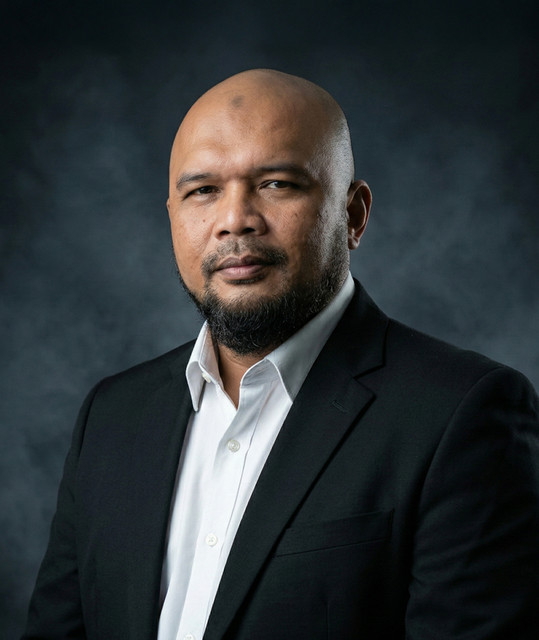
Prof. Ainuddin Wahid Abdul Wahab, cybersecurity expert at Universiti Malaya.
In a session of Bicara Naratif broadcast on 11 December 2024, Prof. Ainuddin Wahid Abdul Wahab from Universiti Malaya outlined why digital sovereignty has become one of the most pressing strategic concerns for Malaysia and the broader region. His remarks covered five interconnected themes: the true meaning of sovereignty in the digital age, the threat of data colonization, the case for local infrastructure, the role of education, and the need for cross-sector coordination.
What Digital Sovereignty Actually Means
Prof. Ainuddin opened by clarifying a common misconception. Digital sovereignty is not simply about who owns data — it is about whether a country has meaningful control over its own digital infrastructure. A nation that depends entirely on foreign-owned platforms, cloud providers, and network hardware for its critical services is, in a practical sense, digitally dependent regardless of what its laws say. True sovereignty requires that national laws apply in cyberspace, that citizens' data is protected, and that the state retains the capacity to act independently when needed.
The Threat of Data Colonization
One of the sharpest warnings Prof. Ainuddin delivered concerned what he described as data colonization. Major technology corporations headquartered outside Malaysia collect and process enormous volumes of data generated by Malaysian users. Data, he argued, is the new oil. Nations that lose control of their data lose an economic and strategic asset they may not be able to recover. The asymmetry is real: a foreign company that processes Malaysian data can derive commercial and intelligence value from it, while Malaysia retains little leverage over how it is used, stored, or shared.
The Case for Local Infrastructure
To translate sovereignty from principle into practice, Prof. Ainuddin identified three concrete requirements. First, data centres must be located within the country, subject to Malaysian jurisdiction and regulation. Second, Malaysia must invest in building domestic technology and expertise rather than remaining a net consumer of foreign technology. A country that cannot build or maintain its own systems is vulnerable in ways that no policy framework can fully offset. Third, critical national systems — banking, healthcare, defence — must have independent security layers that do not rely on foreign vendors for their integrity.
Education as a First Line of Defence
Technology alone cannot secure a digital ecosystem. Prof. Ainuddin stressed that even the most sophisticated infrastructure is undermined by users who lack basic awareness. Phishing, social engineering, and online fraud succeed not because security systems fail, but because people do not recognise the threat. He called for cybersecurity education to begin at the earliest stages of schooling, building habits and instincts that stay with citizens throughout their digital lives. A technically literate population is not a nice-to-have — it is a strategic asset.
Cross-Sector Collaboration
Prof. Ainuddin concluded by framing digital sovereignty as an outcome that no single actor can achieve alone. Academia must generate the research and the expertise pipeline. Industry must develop and deploy the technologies. Government must create the policies, regulations, and enforcement mechanisms that give the entire ecosystem coherence. When these three work in isolation, progress is fragmented. When they work together, the result is a digital environment that is both competitive and secure. Malaysia, he suggested, has the foundations in place — the task now is to coordinate them effectively.
The full session is available on YouTube.